
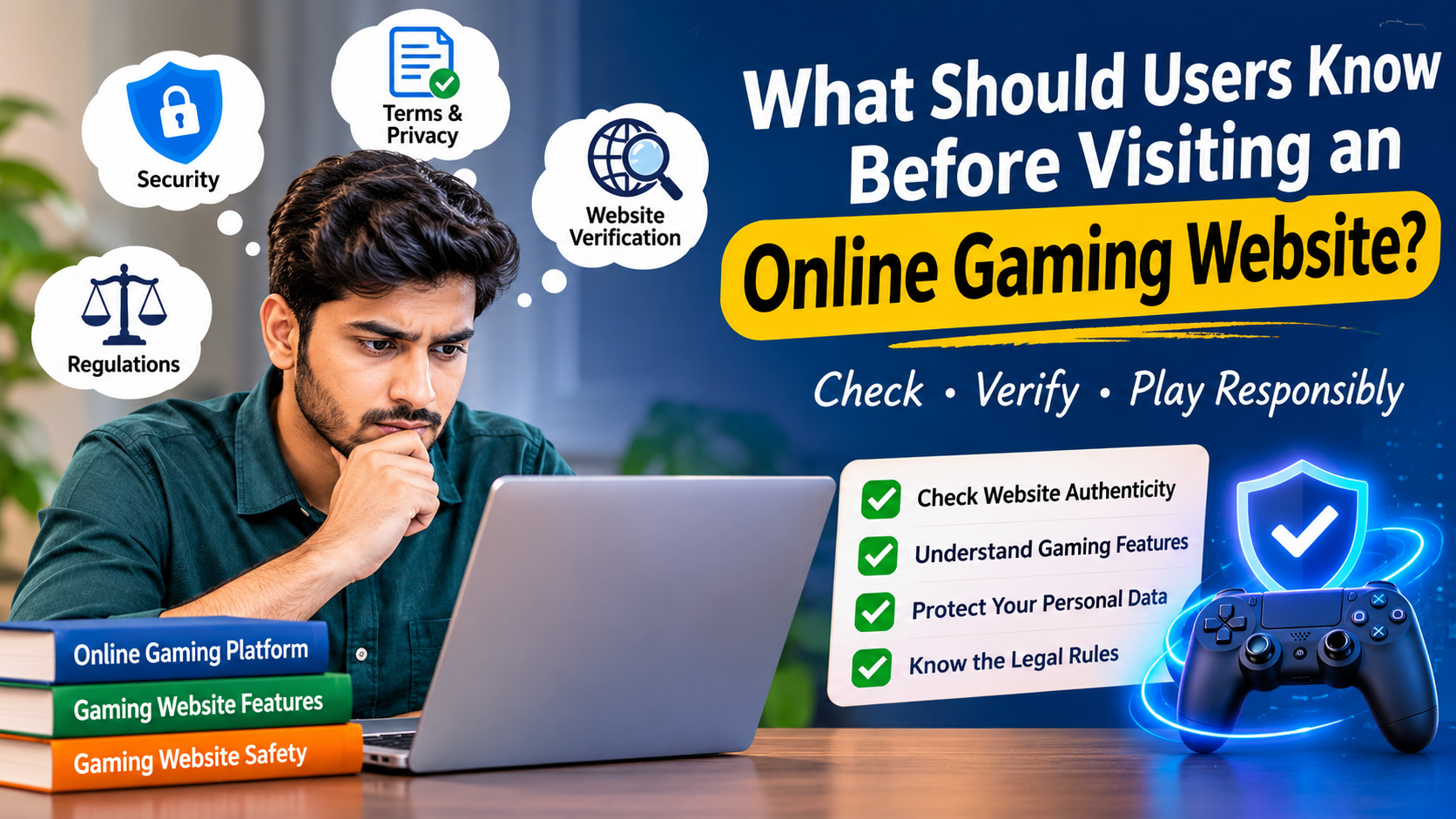
What Should Users Know Before Visiting an Online Gaming Website?
Learn what to check before visiting an online gaming website, including platform security, website verification, privacy protection, digital safety and Indian gaming regulations in 2026.
Introduction
The internet has made digital entertainment more accessible than ever. People can discover different games, explore interactive experiences and learn about online platforms using computers and smartphones. However, not every website provides the same level of transparency, privacy protection or security.
Before visiting an Online Gaming Website, users should understand how the platform operates, what information it collects and whether its services comply with applicable regulations.
A website may have an attractive design, interesting descriptions and several interactive sections, but these things alone do not establish that it is genuine or trustworthy. Understanding the website’s purpose, checking its policies and recognising misleading information are important parts of responsible internet use.
This guide explains the important things users should consider before exploring an Online Gaming Platform. It also covers common Gaming Website Features, website verification methods, personal data protection and the legal framework applicable to online gaming in India in 2026.
What Is an Online Gaming Website?
An Online Gaming Website is a digital platform that provides access to games or interactive entertainment through an internet connection.
Depending on its purpose, a website may focus on casual entertainment, multiplayer activities, educational games, esports or other digital experiences.
However, online gaming is not a single category. Different platforms can operate under different business models and legal requirements.
Types of Online Gaming Platforms
Understanding the main categories helps users identify the type of digital service they are researching.
Online Social Gaming
Online social games are generally designed for recreation, entertainment, interaction or learning. They may include puzzles, quizzes, multiplayer activities and casual digital experiences.
Esports Platforms
Esports involves organised competitive gaming between individuals or teams. It may include structured competitions, tournaments and professional gaming events.
Gaming Information Websites
Some websites publish gaming news, reviews, tutorials, guides and information about different games without directly offering gaming services.
Online Money Gaming Services
Some digital services involve financial stakes and expected monetary winnings. These activities are subject to specific legal restrictions in India under the Promotion and Regulation of Online Gaming Act, 2025.
Understanding these differences is essential because the nature of a platform determines which rules and requirements may apply.
What Should Users Check Before Visiting an Online Gaming Website?
Before trusting a new website, users should examine several important areas instead of relying only on its homepage.
The following checks provide a practical starting point.
1. Check the Website’s Purpose
The first step is understanding what the website actually offers.
Read the homepage carefully and examine its service descriptions. A transparent website should explain its purpose in clear language.
Look for inconsistencies between the homepage, About Us section and other important pages.
Avoid making assumptions based only on the website’s name or promotional statements.
2. Verify Website Ownership
Website ownership is an important factor in understanding accountability.
Check whether the website identifies the organisation or individual responsible for operating it.
Useful details may include:
- Registered business or organisation name.
- Official address.
- Business registration information, where applicable.
- Working contact information.
- Privacy and legal policy details.
Try to compare these details with independent records wherever possible.
A missing or inconsistent business identity makes it difficult to determine who is responsible for the platform.
3. Review the Privacy Policy
An Online Gaming Platform may collect personal information depending on its services.
Before providing any details, read the privacy policy carefully.
It should explain what information is collected, why it is needed, how it is processed and whether it is shared with third parties.
Users should be especially cautious when a website requests unnecessary identification documents or confidential personal information.
4. Examine the Terms and Conditions
Terms and conditions explain the responsibilities of the website operator and its users.
Read the document to understand service limitations, account-related conditions, complaints procedures and legal responsibilities.
Do not accept unclear conditions simply because they appear during registration or account access.
5. Check Contact and Support Information
A website should provide understandable information about how users can contact the responsible organisation.
Check whether the listed email address, phone number or support channels appear genuine and consistent.
Be careful when a website relies entirely on anonymous messaging accounts without identifying its operator.
Important Gaming Website Features to Evaluate
When researching Gaming Website Features, users should focus on functionality, transparency and responsible data handling.
A professional appearance is not enough to establish the quality of a digital service.
Website Navigation and Accessibility
Good navigation makes it easier to understand available information.
Important pages should have clear labels, readable content and consistent menus.
A well-organised website should also work properly on smartphones, tablets and desktop computers.
Privacy and Security Information
Privacy and security information should be easy to locate.
A website should clearly explain its data practices and provide meaningful information about protecting user accounts.
General statements such as completely secure or fully protected should not be treated as independent proof.
Mobile Compatibility
Many people access websites through mobile devices.
A mobile-friendly platform should display text correctly, maintain readable layouts and avoid unnecessary redirects.
Users should also pay attention to unexpected downloads or requests for excessive device permissions.
Transparent Website Information
The website should explain its purpose and relevant policies without misleading language.
Important statements about ownership, security and legal authorisation should be supported by verifiable information.
Accessible Complaint Information
Users should be able to understand how complaints are submitted and who handles them.
Clear grievance information is an important part of platform accountability.
Understanding Gaming Website Safety
Gaming Website Safety involves more than checking whether a page opens correctly.
It includes protecting personal information, avoiding suspicious links, understanding digital risks and recognising misleading claims.
Protect Personal Information
Avoid sharing unnecessary personal details with unfamiliar websites.
Never disclose confidential information such as passwords, banking PINs or OTPs to unknown individuals.
Before submitting personal information, understand why the website is requesting it.
Use Strong Passwords
Use unique passwords for different online accounts.
Avoid common passwords or combinations based on easily identifiable personal details.
Where available, additional authentication methods can provide another layer of protection.
Recognise Phishing Messages
Phishing messages often imitate genuine organisations to obtain confidential information.
They may include:
- Unexpected account verification requests.
- Suspicious login links.
- Messages claiming that an account will be blocked.
- Unusual payment or personal information requests.
Always verify messages using independently confirmed contact details.
Avoid Unverified Applications
Do not install software or mobile applications from unfamiliar links.
Unverified applications may request unnecessary permissions or expose devices to malicious software.
Use official application stores and carefully review application details before installing anything.
Why Website Verification Matters
Website Verification helps users examine whether important information about an online service can be independently confirmed.
It is especially useful when researching an unfamiliar domain.
Check the Exact Website Address
Start by examining the complete URL.
Look for unusual spellings, unfamiliar domain extensions and unexpected redirects.
A website using a name similar to a recognised brand should not automatically be considered an official website.
Understand HTTPS
HTTPS helps encrypt information exchanged between a browser and a website.
However, an HTTPS connection does not prove that the website is genuine, reliable or legally authorised.
It is one technical security indicator rather than a complete trust assessment.
Check Independent Sources
Do not depend exclusively on information published by the website itself.
Look for independent reports, official records and reliable information about the organisation.
Be cautious with testimonials that cannot be independently verified.
Examine Website Policies
Check whether the website publishes accessible privacy policies, terms of service and contact information.
Policies should explain responsibilities clearly and should not contradict the information presented on other pages.
Common Warning Signs Users Should Not Ignore
Some websites use attractive designs and convincing language while providing limited information about their actual operations.
Understanding common warning signs can help users make informed decisions.
Guaranteed Winning or Profit Claims
Statements promising guaranteed winnings, fixed returns or risk-free financial benefits should be treated with caution.
Online activities involving financial stakes can result in losses. Such activities should never be presented as a dependable source of income.
Unclear Business Information
If a website does not identify its operator or provide consistent business information, users should be careful.
Transparency is important for accountability and complaint resolution.
Suspicious Payment Requests
Unexpected payment demands and requests for transfers to unknown personal accounts may indicate potential fraud.
Never share confidential banking credentials or approve unexplained transactions.
Misleading Security Claims
Words such as trusted, official, verified and completely secure require supporting evidence.
A promotional statement does not establish that a platform meets technical or legal requirements.
Online Gaming Information: Understanding India’s Regulations in 2026
Legal awareness is an important part of researching digital gaming services.
India introduced the Promotion and Regulation of Online Gaming Act, 2025 to establish a framework for online gaming, including provisions relating to esports, online social games and online money games.
The Act and the Promotion and Regulation of Online Gaming Rules, 2026 came into force on 1 May 2026.
The framework prohibits online money games, including those based on chance, skill or a combination of both. It also addresses their advertising, promotion, facilitation and related financial transactions.
Difference Between Esports and Online Social Games
Esports involves organised competitive digital gaming.
Online social games are generally associated with recreation, entertainment, education or social interaction.
The legal classification of a game depends on its actual characteristics and the applicable statutory definitions rather than the terminology used in its marketing.
Why Users Should Understand Local Regulations
A website being accessible on the internet does not establish that every service it describes is legally permitted.
Users should check the nature of the activity and relevant official government notifications before making assumptions.
People should consult qualified legal professionals when they need advice about a specific service or activity.
For current information, refer to the Ministry of Electronics and Information Technology:
Safe Online Payment and Digital Privacy Practices
Digital payments have become common in everyday internet use, but users should remain careful whenever financial information is involved.
Follow these basic practices:
- Never share OTPs or banking PINs.
- Check transaction details before approving payments.
- Avoid transferring money to unidentified personal accounts.
- Use trusted payment applications.
- Keep transaction notifications enabled.
- Report suspicious transactions to the relevant bank or payment provider.
A payment confirmation does not prove that a website or service is genuine.
Users should also understand how their information is handled before sharing financial or personal details with any organisation.
How to Make Better Decisions When Exploring Online Platforms
A responsible approach begins with information rather than assumptions.
Before relying on any website, consider the following questions:
- Is the website’s purpose clearly explained?
- Can its operating organisation be identified?
- Are its privacy policies accessible?
- Are security claims supported by evidence?
- Does the website comply with applicable regulations?
- Are there any unrealistic financial promises?
- Can important information be verified independently?
These questions apply to gaming websites as well as other digital services.
An informed decision is based on evidence, transparency and awareness of potential risks.
Conclusion
Exploring digital entertainment can be convenient, but users should understand the website they are visiting before trusting its information or services.
A reliable approach involves checking website ownership, reviewing privacy policies, understanding Gaming Website Features and following basic digital security practices.
This Online Platform Guide highlights why transparency, Website Verification and responsible internet use matter when researching unfamiliar platforms.
In 2026, understanding India’s online gaming regulations is equally important. Users should rely on official information, recognise potential risks and avoid assuming that every service available online is legally permitted.
Making informed digital decisions starts with asking the right questions, checking reliable sources and protecting personal information.
Frequently Asked Questions About Online Gaming Websites
What is an Online Gaming Website?
An Online Gaming Website is a digital platform that provides access to interactive games, recreational activities, multiplayer experiences or gaming-related information through the internet.
What should users check before visiting an online gaming platform?
Users should examine website ownership, contact information, privacy policies, terms and conditions, domain security and applicable legal requirements before trusting a platform.
What are important Gaming Website Features?
Important features to evaluate include clear navigation, accessible policies, transparent service descriptions, mobile compatibility and understandable customer complaint procedures.
Why is Gaming Website Safety important?
Gaming Website Safety helps users protect personal information, reduce account security risks, recognise phishing attempts and avoid misleading online claims.
How does Website Verification work?
Website Verification involves checking the domain address, operator identity, published policies, security information and independent records to assess whether important claims can be confirmed.
Does HTTPS guarantee that an online gaming website is trustworthy?
No. HTTPS encrypts communication between the browser and website but does not independently prove the legitimacy or legal status of the website.
Are online money games permitted in India in 2026?
India’s Promotion and Regulation of Online Gaming Act, 2025 prohibits online money games, including games based on skill, chance or a combination of both. The Act and its accompanying 2026 Rules came into force on 1 May 2026.
How can users protect their personal information online?
Use unique passwords, avoid sharing OTPs, review privacy policies, verify website addresses and avoid providing unnecessary personal information to unfamiliar organisations.